
Australia’s Parliament became the stage for a fierce and emotionally charged debate this week as longstanding tensions over Indigenous policy, funding accountability, and political rhetoric erupted into open confrontation. What began as a speech questioning the structure and effectiveness of Indigenous programs quickly escalated into one of the most polarizing exchanges of the current sitting period, drawing sharp reactions from across the political spectrum.
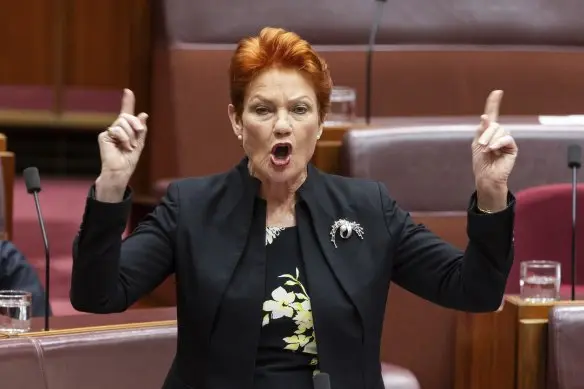
The controversy centered on a forceful address delivered by Pauline Hanson, who called for what she described as “full transparency and measurable outcomes” in federally funded Indigenous initiatives. Citing budget figures and public reports, she argued that billions of dollars allocated over decades have not consistently translated into improved outcomes in areas such as health, housing, and education. Her remarks framed the issue not as a rejection of support, but as a challenge to how that support is administered and evaluated.
Indigenous affairs funding in Australia is substantial and multifaceted, involving federal, state, and local programs. Reports from the Productivity Commission and Closing the Gap frameworks have documented both progress and persistent disparities. Life expectancy gaps have narrowed in some regions, while other targets—particularly in incarceration rates and educational attainment—remain areas of concern. These mixed outcomes have fueled ongoing debate about program design, community-led governance, and bureaucratic efficiency.
During her speech, Hanson questioned whether layers of administration and consultancy structures absorb disproportionate resources. She argued that funding models should prioritize direct community control and measurable performance indicators. “Taxpayers deserve clarity, and communities deserve results,” she said, urging an independent audit of program expenditures. The tone was sharp, and her phrasing uncompromising, prompting immediate objections from members of the Greens and other senators who interpreted the speech as unfairly targeting advocacy organizations.
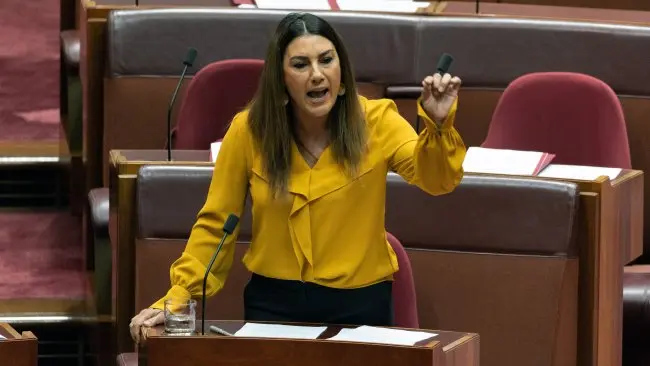
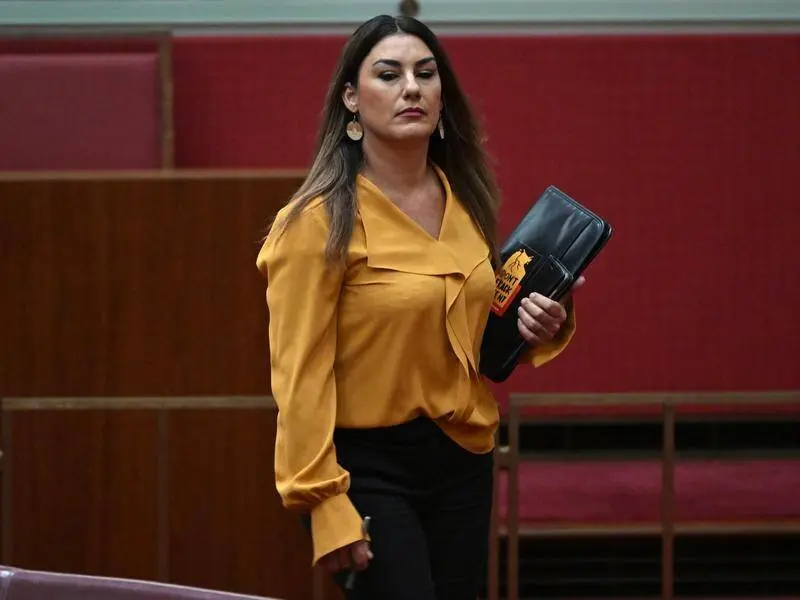
Greens senators responded by defending Indigenous rights groups and community organizations as essential advocates for equity and justice. They emphasized that structural disadvantage cannot be reduced to budget line items and warned against rhetoric that might undermine trust in grassroots leadership. One senator argued that framing the issue primarily around “dependency” risks oversimplifying historical and systemic complexities, including the legacy of colonization and policy failures of previous eras.
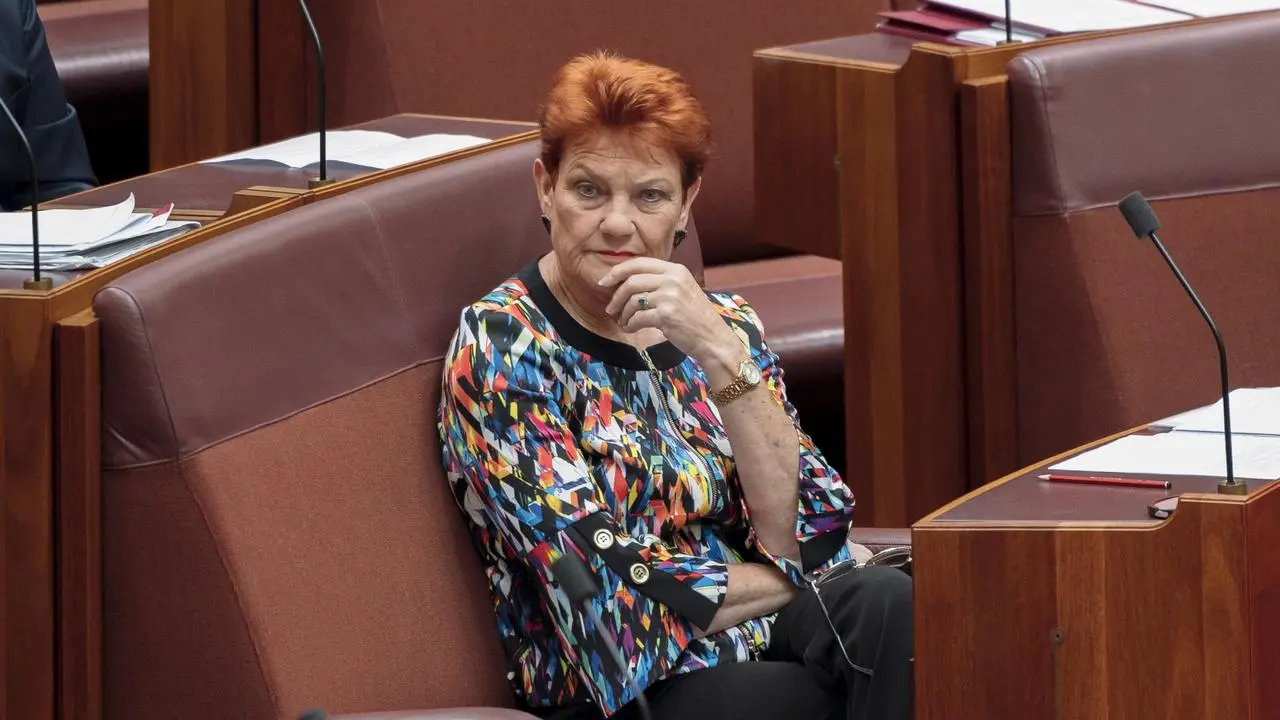
The chamber grew increasingly tense as points of order were raised and interjections overlapped. The presiding officer called repeatedly for decorum, reminding senators that robust disagreement must remain within parliamentary standards. While no formal procedural breach occurred, the atmosphere reflected the depth of ideological division surrounding Indigenous affairs policy.
Outside Parliament, reactions were equally divided. Some commentators welcomed calls for enhanced transparency, noting that accountability mechanisms strengthen public confidence in social investment. Others cautioned that rhetoric perceived as accusatory may inflame division and distract from collaborative reform efforts. Indigenous leaders expressed varied perspectives, with some supporting greater auditing clarity while others criticized the framing of the speech as potentially stigmatizing.
Experts in public policy point out that Indigenous program funding operates within complex intergovernmental arrangements. Professor Helen Cartwright, a governance specialist, explains that “multiple departments, grants structures, and reporting frameworks create fragmentation. Calls for consolidation and clearer metrics are not new, but implementation is politically and administratively challenging.” She adds that evaluation must balance quantitative data with qualitative community outcomes.
The debate also intersects with broader national conversations following the 2023 referendum on the Indigenous Voice to Parliament. Although the proposal did not pass, it intensified scrutiny of how Indigenous representation and funding decisions are structured. Questions about who controls resources, how accountability is enforced, and how outcomes are measured remain central to policy discourse.
In her closing remarks, Hanson reiterated that her intention was to challenge administrative inefficiency rather than community identity. Critics remained unconvinced, arguing that tone and context shape public interpretation as strongly as stated intent. The exchange highlighted a recurring tension in democratic politics: the line between policy critique and perceived cultural insensitivity can be thin and highly contested.
Political analysts note that parliamentary confrontations over social policy often reflect deeper strategic positioning. Economic pressures, fiscal scrutiny, and shifting voter priorities increase the salience of debates about public spending. In that environment, calls for audits or structural reform resonate with segments of the electorate concerned about government efficiency. At the same time, advocates for social equity emphasize that reducing disadvantage requires sustained investment rather than episodic review.
The larger question underlying the dispute is how to reconcile accountability with empowerment. Indigenous community-controlled organizations have argued for greater autonomy in designing and delivering services, contending that local leadership improves outcomes. Government agencies, meanwhile, must satisfy public reporting obligations and fiscal oversight standards. Balancing these imperatives demands careful policy calibration rather than rhetorical escalation.
By the end of the session, Parliament returned to scheduled legislative business, but the emotional residue of the debate remained evident. Media coverage amplified the confrontation, framing it as emblematic of broader ideological divides about national identity, responsibility, and reform. Social media commentary intensified polarization, with supporters and critics interpreting the same speech through sharply divergent lenses.
Whether the episode leads to formal review processes or fades amid other legislative priorities is uncertain. Calls for audits and transparency mechanisms may evolve into committee inquiries, or they may remain part of ongoing rhetorical contest. What is clear is that Indigenous policy will continue to occupy a central place in Australia’s political landscape.
Democratic institutions are designed to withstand such clashes. Heated debate, when channeled through procedural safeguards, forms part of the accountability ecosystem. Yet the durability of public trust depends not only on oversight but on mutual recognition of complexity. Indigenous disadvantage is neither solved solely by funding increases nor by funding cuts; it requires sustained, collaborative governance informed by evidence and community voice.
The latest parliamentary eruption underscores that conversations about equity, accountability, and reform are far from settled. In a nation still negotiating its historical legacy and future direction, these debates will likely remain intense, contested, and deeply consequential.