
😱😱😱BREAKING NEWS: The Anti-Doping Agency of Kenya (ADAK) has announced the provisional suspension of 27 athletes across various disciplines, including a surprising athletics star you wouldn’t expect.

The global sports community was shaken after the Anti-Doping Agency of Kenya (ADAK) confirmed the provisional suspension of 27 athletes from multiple sports. The announcement, made publicly around March 2–3, 2026, has ignited intense debate about doping control and integrity.
This development comes at a particularly sensitive moment for Kenya, a nation long celebrated for producing some of the greatest distance runners in the history of global athletics. The suspensions involve competitors from athletics, football, basketball, volleyball, and other disciplines.
Among the most surprising names included in the announcement was Wiseman Were, a rising star in the 400-meter hurdles who recently earned national champion status. His provisional suspension has shocked fans and analysts who had followed his rapid rise.
According to ADAK officials, Were’s suspension stems from violations related to “whereabouts failures,” a rule requiring elite athletes to provide accurate location information for unannounced doping tests. Authorities confirmed that the hurdler allegedly missed three mandatory testing opportunities since August 2025.
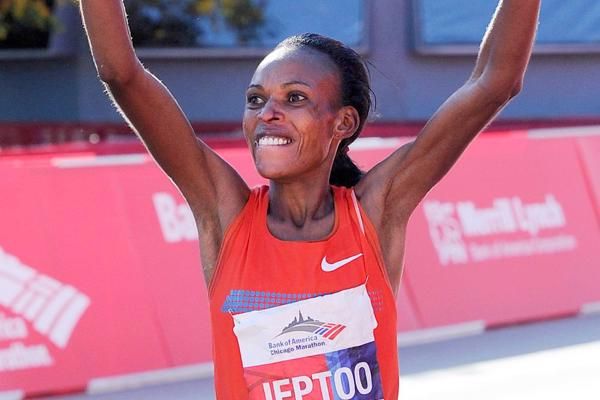
Whereabouts violations are considered administrative infractions rather than direct proof of doping. However, under global anti-doping regulations, three missed tests within a twelve-month period can still trigger sanctions equivalent to other rule violations.
Another name that immediately drew international attention is marathon veteran Rita Jeptoo. Once celebrated for her extraordinary endurance and tactical brilliance, Jeptoo now faces another serious chapter in her complicated doping history.
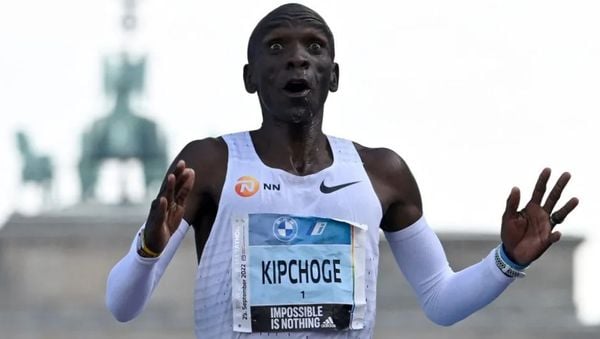
Jeptoo previously won prestigious races such as the Boston Marathon and the Chicago Marathon, achievements that placed her among the elite long-distance runners of her era. Her victories helped solidify Kenya’s reputation as a dominant force in marathon running.
However, ADAK reports that Jeptoo’s provisional suspension follows the detection of anabolic androgenic steroids in her sample. These substances, commonly abbreviated as AAS, are strictly banned under the global anti-doping code because they enhance muscle development and recovery.
The case is particularly controversial because it represents the second time Jeptoo has been linked to doping violations. In 2014, she received a four-year suspension after testing positive for a banned substance, a scandal that already tarnished her previously celebrated career.
Beyond these headline names, several other athletes from Kenyan athletics are also listed among those temporarily suspended. Middle-distance runner Festus Lagat is facing sanctions related to whereabouts failures and has reportedly launched an urgent appeal.
Lagat has taken his case to the Court of Arbitration for Sport (CAS), seeking to overturn or delay the suspension while legal proceedings continue. The appeal underscores how complex and contentious anti-doping cases can become within international sport.
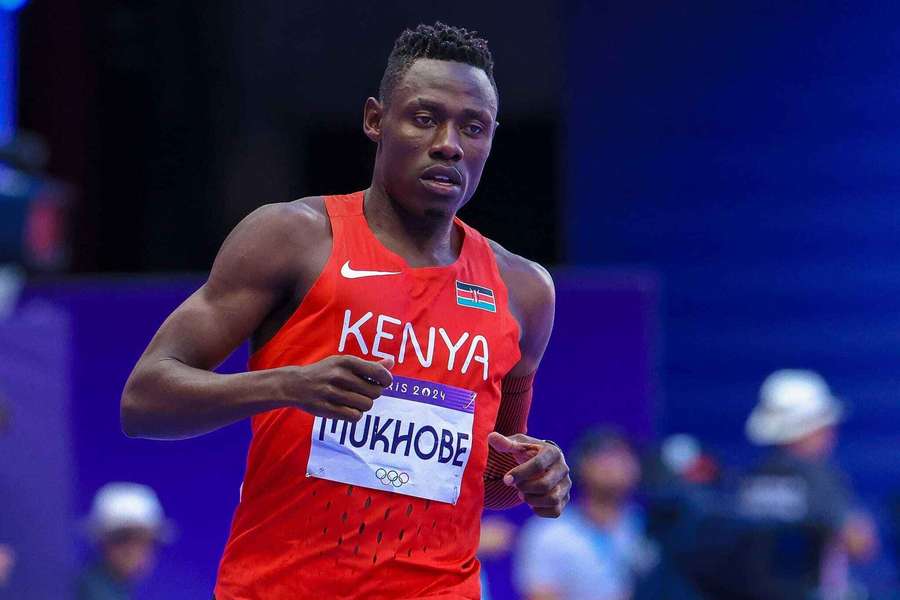
Another athlete named by ADAK is Bravin Kiptoo Kipkogei, who has also been included on the agency’s disciplinary list. While details of the alleged violation remain limited publicly, his inclusion adds to the scale of the announcement.
Similarly, Gladys Kipkoech Jeptepkeny has been provisionally suspended pending further investigation. Cases like these highlight the broad scope of the current crackdown and illustrate how doping oversight affects athletes at many levels.
Among other track and field athletes, Scholastica Jepkemboi faces accusations linked to the presence of the prohibited substance 19-norandrosterone, a metabolite associated with anabolic steroids. Its detection typically triggers immediate provisional suspension under anti-doping regulations.
Distance runner Philemon Kiplagat Ruto has also been cited for whereabouts failures, reinforcing the pattern seen in several of the cases announced. Administrative non-compliance continues to be a frequent cause of anti-doping investigations.
Another individual identified by ADAK is Kimaiyo Kiboi David, who allegedly tested positive for anabolic androgenic steroids. The presence of such substances constitutes one of the most serious violations within modern anti-doping frameworks.
The list does not stop with athletics. Players from other sports were also named, demonstrating that anti-doping enforcement extends across the entire sporting landscape. Footballer Maroa John Mwita is among those temporarily suspended.
Another football player, Bonphas Munyasa, has also been included on the disciplinary roster. These cases suggest that the anti-doping initiative is targeting multiple federations rather than focusing solely on track and field.
The timing of the announcement has created what many observers describe as a bittersweet moment for Kenya’s sporting authorities. Just days earlier, the World Anti-Doping Agency removed the country from its compliance watch list.
For years, Kenya had faced scrutiny over repeated doping scandals involving elite runners. International pressure intensified after several high-profile cases led to concerns that systemic weaknesses existed within the national anti-doping infrastructure.
In response, Kenyan authorities implemented a series of reforms designed to strengthen testing protocols, expand education programs, and increase funding for anti-doping enforcement. These changes were praised by global regulators as meaningful progress.
The decision by the World Anti-Doping Agency to lift Kenya from the compliance watch list was widely interpreted as recognition that those reforms were beginning to produce results. Many officials viewed it as a turning point for the country’s sporting reputation.
Yet the sudden announcement of 27 provisional suspensions has complicated that narrative. While some experts see the crackdown as proof that the new system is actively identifying violations, others worry about the negative headlines that inevitably follow.
Sports analysts have described the situation as “bittersweet” because it simultaneously demonstrates stronger enforcement while revealing the continuing scale of the doping challenge. The crackdown shows vigilance, but it also exposes persistent problems.
Kenya’s athletics community has reacted with a mixture of concern, disappointment, and cautious optimism. Coaches and administrators acknowledge that strict enforcement is necessary if the nation wants to restore long-term credibility.
At the same time, athletes have expressed frustration that administrative mistakes such as whereabouts failures can have consequences nearly as severe as positive doping tests. For many competitors, managing the logistical requirements of constant testing remains difficult.
Anti-doping experts, however, argue that the whereabouts system is essential for effective enforcement. Without it, athletes could potentially avoid unannounced testing windows, undermining the entire structure designed to ensure fair competition.

The broader sports world is now watching closely to see how these cases unfold. Provisional suspension does not automatically mean an athlete will ultimately be banned, but it prevents them from competing while investigations and hearings continue.
Legal proceedings, laboratory analysis, and appeals could take months before final verdicts are delivered. Some athletes may successfully challenge the findings, while others could face long suspensions if violations are confirmed.
For fans, the controversy serves as another reminder of the delicate balance between extraordinary athletic performance and the strict regulatory systems required to protect fairness. The debate surrounding doping remains one of the most complex issues in modern sport.
As the investigation continues, ADAK officials insist that transparency and accountability will remain their guiding principles. By publicly announcing the suspensions, the agency hopes to demonstrate that enforcement applies equally to all athletes.
Ultimately, the future reputation of Kenyan athletics may depend not on the existence of violations but on how effectively they are addressed. The current wave of suspensions could mark either a setback or a turning point.
What remains certain is that the world will be watching closely as these cases develop. The outcomes will shape perceptions not only of the athletes involved but also of Kenya’s ongoing effort to rebuild trust in the integrity of its sporting achievements.